A flashing security light doesn’t always mean something is wrong. On many cars, including many Toyota, Lexus, Nissan and Infiniti models and some Chrysler, Dodge, Jeep and Ram vehicles, the light flashes while the car is parked and off to show that the anti-theft system, the immobilizer, is armed. That’s normal. The trouble is when the light flashes or stays on while you’re trying to start and the engine won’t start. Depending on the make, that means the car isn’t accepting your key, or the system itself has a fault.
What the light is telling you
· Flashing while the car is parked and off: normal on many cars. The system is armed.
· On briefly when you switch on, then off: normal.
· Flashing when you try to start, and the engine won’t start: the car isn’t accepting the key. If it keeps flashing after a retry, the system may have a problem.
· Staying on with the car switched on: depending on the make, the key isn’t recognized or the system has a fault. Find your make below.
What the security light is
The light belongs to the engine immobilizer. Your key carries a chip, called a transponder, and the car has to read a key it knows before it lets the engine run. Kia puts it plainly: an immobilizer keeps the engine from starting “unless the correct key is present.” On a push-to-start car, the smart key does the same job.
Carmakers name the light differently: the security indicator (Toyota, Lexus, Nissan, Infiniti), the immobilizer indicator (Honda, Hyundai, Kia), the security light (Chevrolet, GMC), the theft indicator (older Fords) and the Vehicle Security Light (Chrysler, Dodge, Jeep and Ram). Hondas with the security alarm also have a separate alarm light. Whatever yours is called, the question is the same: when does it flash?
Make by make: normal, or a problem?
Here’s what each carmaker’s own owner’s manual or service bulletin says. Models differ, so check yours for the exact steps; many carmakers post their manuals online.
Toyota and Lexus
- Normal: the security indicator flashes after the engine switch is turned off, which shows the immobilizer is set; Lexus’s guide says the same. On a Toyota, it stops flashing when you switch to ACC or ON with a registered key.
- Won’t start: Toyota’s owner’s manual says the immobilizer may not have been deactivated, and to contact a dealer. Toyota’s troubleshooting pages also list a discharged battery, loose or corroded battery terminals, a dead key battery and a blown fuse.
- Check the key: metal touching the grip of the key, or another car’s key right next to it, can keep the car from reading it.
- Dead fob: touch the Toyota emblem side of the key to the start button, then press it, and replace the key battery right away. Lexus owners will find the steps for their model in the manual.
- Need a key? See Toyota and Lexus keys.
Honda and Acura
- Two lights: the green immobilizer indicator lights for a moment when you switch the ignition to ON, then goes out. On models with the security alarm, a separate alarm indicator blinks once the alarm is set, which is normal with the car parked.
- Problem: if the immobilizer indicator stays on, the car can’t recognize the key. If it blinks, the engine won’t start. Honda’s owner’s manual (PDF) says to turn the switch to LOCK, take the key out, put it back in and turn it to ON again. If it keeps blinking, the system may be malfunctioning, and Honda says to have a dealer check it.
- Acura: a blinking indicator means the key or remote isn’t being recognized, and you may not be able to start. Acura’s owner’s guide (PDF) says to switch the vehicle off and back on; if the blinking continues, the system may have a problem, and you should see a dealer. An older Acura guide adds: use the other key.
- Check the key: keep anything that gives off strong radio waves away from the ignition switch, keep the key from touching metal, and keep other cars’ immobilizer keys away from it.
- Weak remote battery on push-button models: follow the message on the dash. Hold the back of the remote against the ENGINE START/STOP button, then, with your foot on the brake, press the button within 10 seconds.
- Need a key? See Honda and Acura keys.
Nissan and Infiniti
- Normal: the security indicator light blinks with the ignition in LOCK, OFF or ACC, which means the anti-theft system is working. Infiniti’s manual describes the same blinking.
- Problem: if the light stays on with the ignition ON, the system is malfunctioning. Nissan recommends a dealer and asks you to bring every registered key you have; Infiniti recommends an Infiniti retailer.
- Won’t start: Nissan’s US owner’s manual (PDF) names interference from another key, a toll road device or a payment device on the key ring. Its fix: leave the ignition ON for about 5 seconds, switch it to OFF or LOCK and wait about 10 seconds, repeat, then start again while holding the device away from the key. If it keeps happening, Nissan suggests giving the registered key a ring of its own.
- More from Nissan’s service bulletins (2019 and 2024, PDF): an RFID chip or several keys on one key ring, aftermarket alarm systems, phones, other Intelligent Keys, highway pass cards, USB chargers, even purses and backpacks with RFID-blocking material. Nissan says these no-starts usually come and go.
- Dead Intelligent Key: touch the ignition (start) switch with the key; after the chime, press the brake and push the switch within 10 seconds. With a dead car battery, the ignition can’t be switched ON at all.
- Need a key? See Nissan and Infiniti keys.
Ford and Lincoln
- How it works: Ford’s SecuriLock Passive Anti-Theft System (PATS) needs a coded key programmed to the vehicle, and Ford says using the wrong key could keep the engine from starting. Lincoln says the same.
- Right key, still no start: if a correctly coded key won’t start the engine, Ford says to have the dealer inspect the vehicle, and Lincoln says there’s a problem with the system.
- Older Fords (about 1996 to 2002): on many of them, a Ford service bulletin says the theft light glowing for 2 or 3 seconds when you turn the key on is normal, and so is a flash every 2 seconds with the key off. Rapid flashing means the system didn’t accept the key; on some of these systems an “anti-scan” feature then makes you wait before it reads a key again. Newer models vary, so go by your manual.
- Check the key ring: the same bulletin lists large metal objects, extra PATS keys and devices for buying gas on the key chain.
- Aftermarket remote start: Ford says PATS doesn’t work with aftermarket remote starters that aren’t Ford’s; using one could mean no-starts and a car without its theft protection. Lincoln says the same about remote starters that aren’t Lincoln’s.
- Push-button models: if the intelligent key has no charge or its signal is jammed, place it in the backup slot, which sits in the center console, a cupholder or elsewhere, depending on the model.
- Need a key? See Ford keys.
Chevrolet, GMC and other GM brands
- Normal: the security light shows for a moment when you switch the ignition on, then goes out. Some GM manuals call it the immobilizer light.
- Problem: if it stays on and the engine won’t start, there’s a problem with the system. GM’s owner’s manual for the 2015 Silverado (PDF) says to turn the ignition off and try again, to try another key if the key looks undamaged, and that the fuse may need checking. If the other key starts the car, the first key may be faulty. If it doesn’t, the vehicle needs service.
- Radio interference: a 2021 GM bulletin (PDF) covering all its brands lists other cars’ immobilizer keys, toll passes, gate and parking passes, building access cards and gas “speed passes” on the key ring, plus phone chargers, USB power banks, aftermarket LED lights and a decorative “Bedazzle” trim ring around the ignition. The bulletin is written for a security light that comes on intermittently, and it says that in most cases the problem can’t be duplicated.
- Adding a key: on most 2017 to 2021 turn-key models, GM documents a “Quick Learn” that needs two already-programmed keys (GM lists a few exceptions, such as the Express and Savana vans); on 2016 and older, one is enough. The security light goes off once the new key is learned. Some GM owner’s manuals also describe a key-learn for when no key works. On a 2015 Silverado it takes about 30 minutes, and every other key stops working, so read your manual first. It’s a job for a locksmith or a dealer with the right equipment.
- Push-button models with a dead fob: the vehicle starts with the fob in the backup pocket; your manual shows where it is.
- Need a key? See Chevy and GMC keys.
Chrysler, Dodge, Jeep and Ram
- Normal: the Vehicle Security Light comes on for three seconds as a bulb check when you switch on. A Stellantis service case (PDF) adds that on some models the light flashes every two seconds after you switch off, until a programmed key disarms the system. That’s the system armed, not a fault.
- Flashing after the bulb check: someone tried to start it with a fob the system treats as invalid, and a fob that hasn’t been programmed counts as invalid, the Mopar owner’s manual says.
- Stays on after the bulb check: a problem with the electronics that needs dealer service. If it comes on while you’re driving, Stellantis says the vehicle should be serviced.
- Right fob, still no start: the fob may be somewhere the system has trouble detecting it, such as on the dash. Move it, switch off and try again. Signals from a TV or radio station, a transceiver or a phone can interfere too. If the engine doesn’t start after three or more tries, the same service case has the technician scan for trouble codes.
- Dead fob: if the START/STOP button doesn’t change modes, the fob battery may be low or dead. Put the nose of the fob, the side opposite the emergency key, against the START/STOP button and push.
- Aftermarket remote start: the manual warns that some aftermarket remote starters aren’t compatible with the system; they can cause starting trouble and leave the vehicle without its theft protection.
- Need a key? See Jeep, Dodge and Ram keys.
Hyundai and Kia
- Normal: the immobilizer indicator comes on briefly, then goes off.
- Problem: if it starts to blink, the system doesn’t recognize the key’s coding. Another immobilizer key, or a metal object such as a key chain, near the key can cause it.
- What the manuals say to do: Hyundai’s says to move the Engine Start/Stop button to LOCK/OFF, then switch on again, and to see a dealer if it keeps happening. Kia’s says the same.
- Dead smart key: push the Engine Start/Stop button using the smart key itself; Kia says the key should touch the button at a right angle. Don’t hold the button down for more than 10 seconds.
- Damaged key: Hyundai warns that moisture, static and rough handling can make the immobilizer malfunction.
- The theft upgrade: Hyundai’s free anti-theft software is for turn-key models without an immobilizer. After it’s installed, Hyundai and Kia say to lock and unlock the car with the key fob (more in the FAQ below, and in our Hillsborough car-theft guide).
- Need a key? See Hyundai and Kia keys.
Checks to try before you call anyone
These come from the manuals and bulletins above. Go in order, and stop after a few tries.
- 1. Notice when it flashes. Parked and off: the system is armed. While you try to start: the car is turning the key down, or there’s a fault.
- 2. Switch off and try once more, the way your make does it. Nissan has its own ON-and-OFF routine (above).
- 3. Take the key off the ring. Pull off other keys and fobs, toll passes, RFID tags and access cards, and keep phones and chargers away from the key.
- 4. Try your spare. GM and Acura manuals say to. If the spare starts the car, the first key is likely the problem; if neither works, GM says the vehicle needs service.
- 5. Dead fob? Use your make’s backup start (above), then replace the fob battery. For more on fobs the car can’t find, read key not detected on a push-to-start car.
- 6. Move the fob off the dash, or out of any spot where the car has trouble reading it, and try again.
- 7. Check the 12-volt battery. Dim lights or a slow crank point to the car battery, not the key; jump-start it the way your owner’s manual shows. On a GM, check the fuse too.
What not to do
- Don’t keep cranking. Honda says no more than 15 seconds in START, then wait at least 10 seconds before trying again. Hyundai and Kia say not to press the start button for more than 10 seconds.
- Stop after a few tries. After three or more failed starts, Stellantis has the technician scan for trouble codes, and on some older Fords a rejected key sets off an “anti-scan” lockout.
- Don’t add a bypass. “Do not modify or remove the system,” Toyota’s manual says. Honda and Hyundai say not to alter it or add devices, Kia says altering it can leave the car inoperable, and Ford and Mopar warn that aftermarket remote starters can cause starting problems.
- Don’t count on a used fob. The Mopar manual says one taken from another vehicle can’t be reprogrammed to yours.
- Don’t take the key apart except to change its battery; Honda says keys contain precision electronics.
- Don’t start replacing parts. GM tells its technicians not to replace parts before they’ve duplicated the problem. A good shop tests first.
What causes it
The same causes come up across the manuals and bulletins:
- A key the car doesn’t know: a new key, a copy that was cut but never programmed, or a fob from another car. For an unprogrammed key, Ford’s bulletin says there’s “no issue with the PATS key itself”: it just needs programming.
- A damaged key: dropped, wet, hit by static or crushed under something heavy. Keys contain precision electronics.
- A weak fob battery on a push-button car.
- A weak 12-volt battery, or loose or corroded battery terminals.
- Interference from other keys and fobs, toll passes, RFID tags, phones and chargers.
- An aftermarket remote starter or alarm. Ford’s bulletin lists remote starter equipment as a cause.
- A failed key reader at the ignition; Ford’s bulletin names transceiver antenna failure.
- A fault in the system’s electronics: the “stays on” case, which the manuals send for service, usually at a dealer.
To rule out a recall, run your VIN at nhtsa.gov/recalls.
Locksmith, dealer or mechanic: who fixes it?
Owner’s manuals default to “see your dealer,” but the dealer isn’t the only place to get a key. GM’s own manual says the key tag lets “the dealer or qualified locksmith” make new keys. Here’s how it usually splits:
- Flashing only while parked: nobody. That’s normal.
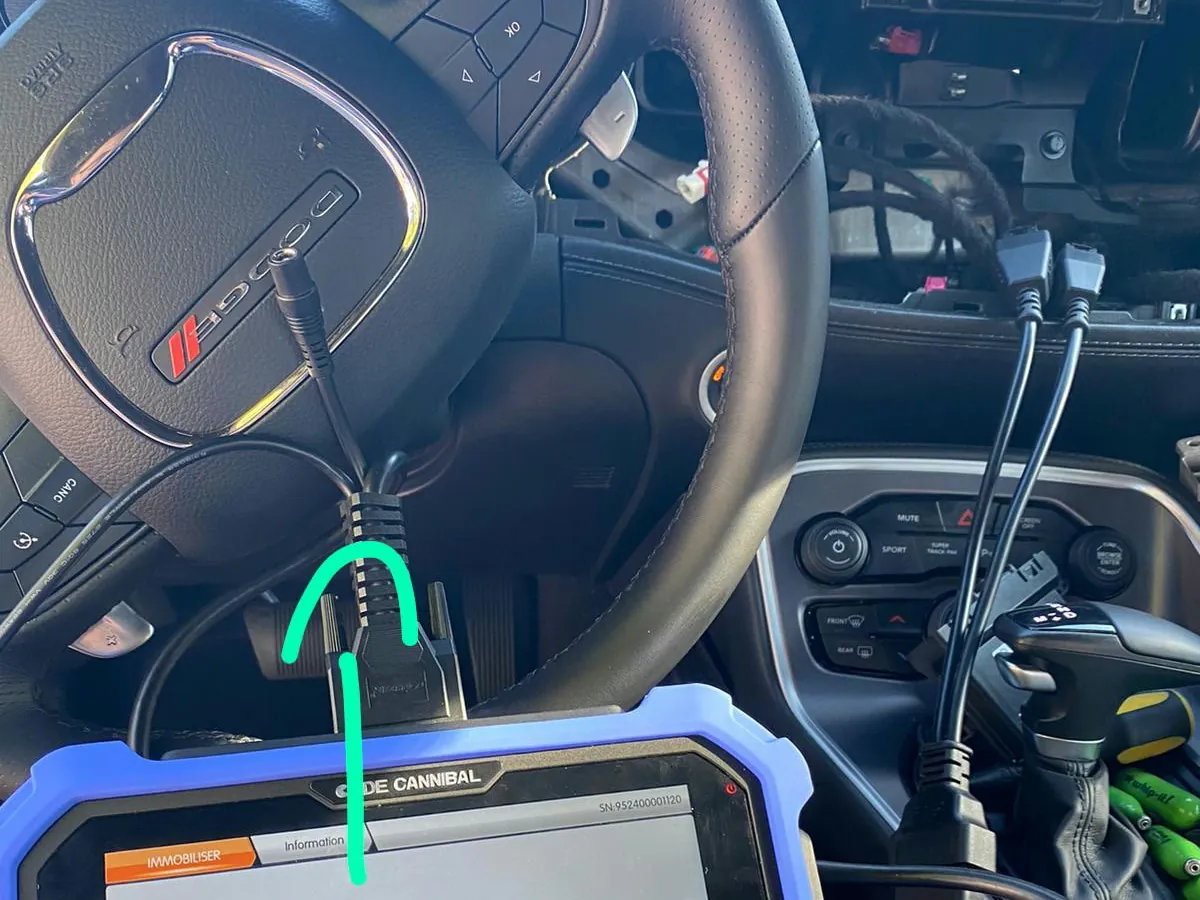
- The key isn’t recognized, there’s no spare to test with, or every key is lost: a locksmith who programs keys. We do transponder (chip) key programming, key fob and smart key replacement and lost car key replacement from the VIN or key code.
- The spare works and the main key doesn’t: the main key is most likely the problem. Get a new spare car key made while one still works.
- A key that works only sometimes, a cracked shell, a broken flip key, or a key that was dropped or got wet: a locksmith. We repair shells and flip keys, or make and program a new key.
- Dead fob battery, backup start works: change the battery yourself, or let us do the battery and the shell.
- The key won’t turn, or the ignition is worn or damaged: a locksmith; we do ignition repair and replacement. That’s a separate problem from the light (see key stuck or won’t turn).
- A newer Jeep, Dodge, Ram or Chrysler: FCA, now Stellantis, put a security gateway on most of its 2018 and newer vehicles, and authorized aftermarket tools can unlock it. We have the equipment for that security layer.
- A newer GM or a BMW: we program those keys too (see BMW keys).
- A new key for a Mercedes-Benz from 2015 on, Sprinter vans too: the dealer. For those years, only a Mercedes-Benz dealer can supply a new key. We can still unlock any Mercedes-Benz, put a new battery or shell on its fob and cut its emergency blade, and for most models up to 2014 we make the key. Call with the VIN.
- The light stays on (Nissan, Infiniti and GM with the ignition on; Chrysler, Dodge, Jeep and Ram after the bulb check), comes on while you’re driving, or keeps flashing with every key: the dealer. That’s where the manufacturers send system faults.
- A slow crank, dim lights, clicking, a dead 12-volt battery, corroded terminals, or fuel or starter trouble: a mechanic or a battery service, or a jump-start the way your manual shows.
- An aftermarket remote starter or alarm in the picture: the shop that installed it, a dealer or a mechanic.
FAQ
What does it mean when the security light flashes and the car won’t start?
Usually, that the car isn’t accepting the key: Honda, Acura, Hyundai, Kia and Mopar manuals tie a light that flashes at startup to a key the system doesn’t recognize. Switch off and try again, take the key off a crowded key ring and try your spare. If it flashes with every key, or stays on with the ignition on, the system itself may have a fault (on a Honda, a light that stays on means the key isn’t being recognized).
Is it normal for the security light to flash when the car is off?
On many cars, yes. Many Toyota, Lexus, Nissan and Infiniti models flash it while parked to show the anti-theft system is armed, and so do some Chrysler, Dodge, Jeep and Ram vehicles. On Hondas that have the security alarm, a separate alarm light blinks once the alarm is set.
Can a toll pass or another key on my key ring stop the car from starting?
Yes. Nissan and GM list toll devices and extra keys on the key ring as possible interference; GM adds parking and building access cards, and an older Ford bulletin names extra keys and gas-purchase tags. Take the car key off the ring and try again; if that works, keep it on its own ring, as Nissan recommends.
Do I need the dealer to fix a flashing security light?
Not always. If the problem is the key — not recognized, damaged or lost — a locksmith who programs keys can make a new one; GM’s own owner’s manual says the dealer or a qualified locksmith can make new keys. A fault in the system itself, where the manual says the system is malfunctioning, is dealer work, and so is any new key for a Mercedes-Benz or Sprinter from 2015 on.
How do I reset the security light on a Chevy or GMC?
Start with GM’s owner steps: ignition off and try again, try your other key, check the fuse. On most 2017 to 2021 turn-key models, GM’s Quick Learn adds a key if you have two programmed keys; on 2016 and older, one is enough. Some GM manuals describe a key-learn for when no key works — about 30 minutes on a 2015 Silverado, and every other key stops working — so read yours first, or leave it to a locksmith or dealer with the right equipment.
My Hyundai or Kia got the anti-theft upgrade. Why won’t it start?
After the upgrade, locking the doors with the key fob sets the alarm and an “ignition kill,” and Hyundai says you must use the fob to unlock the car; Kia says the same for the upgraded Rio. If the car was opened with the metal key, unlock it with the fob and try again.
Car still won’t take the key? Tell us what the light is doing. Zoom Locksmith picks up at (305) 528-1358 from 8am to 8pm, Monday to Saturday; read us the VIN, or just the year, make and model, and you’ll get a free quote. As a family-owned car locksmith in Tampa, insured and bonded, we’ve cut and programmed keys at the car since 2018, from Tampa to Brandon and across Tampa Bay, in English or Spanish.