If a child, a pet or anyone who can’t get out on their own is locked inside a car, call 911 first. Don’t wait to see whether the car gets hot. The National Highway Traffic Safety Administration (NHTSA) says that if you see a child alone in a locked car, “act immediately and call 911.” 911 sends police and firefighters, and the dispatcher can tell you what to do until they arrive. A locksmith is not a substitute for 911.
Someone locked in a car? Do this now:
1. Call 911.
2. Tell the dispatcher where the car is, who is inside and how they look.
3. Stay with the car, keep them in sight and follow the dispatcher’s instructions.
Why a closed car turns dangerous so quickly
Sunlight heats the dashboard, steering wheel and seats, and they heat the air trapped inside. Dark surfaces often reach 180 to over 200°F, according to NoHeatStroke.org. Citing research on vehicle safety for children, the American Veterinary Medical Association (AVMA) lists how much hotter than outside a parked car gets:
- 10 minutes: 19°F hotter
- 20 minutes: 29°F hotter
- 30 minutes: 34°F hotter
- 1 hour: 43°F hotter
The rise is basically the same whether it’s 70 or 110 degrees outside, the AVMA says, so even a 70-degree day can mean more than 110 degrees inside after an hour. NHTSA says rolling the windows down or parking in the shade “does little to change the interior temperature,” and in NoHeatStroke.org’s study, cracked windows changed it by less than 3°F.
Children are the most vulnerable: according to NHTSA, a child’s body temperature rises three to five times faster than an adult’s. Heatstroke begins at a core body temperature of about 104°F, and death occurs at 107°F or above.
Hot-car deaths by the numbers
From 1998 through 2025, 1,041 children died of vehicular heatstroke in the United States, and 115 of them were in Florida, second only to Texas. More than half (52.9%) were forgotten by a caregiver, nearly a quarter (23.8%) got into the car on their own, and 54% were younger than 2. Source: Jan Null, CCM, Department of Meteorology and Climate Science, San Jose State University, NoHeatStroke.org.
Is it illegal to leave a child in a car in Florida?
For children younger than 6, yes, in two situations. Under section 316.6135 of the Florida Statutes, a parent, guardian or other person responsible for the child may not leave them unattended or unsupervised in a motor vehicle:
- For more than 15 minutes. That’s a second-degree misdemeanor.
- For any length of time if the engine is running, the child’s health is in danger or the child appears to be in distress. That’s a noncriminal traffic infraction with a fine of $50 to $500.
Either one is a third-degree felony if it causes great bodily harm, permanent disability or permanent disfigurement. An officer who sees a violation may use whatever means are reasonably necessary to protect the child and remove them from the vehicle, and if no parent, guardian or other responsible person can be located, the child goes into the custody of the Florida Department of Children and Families. That’s the car-specific law, and it doesn’t make leaving an older child legal: Florida’s child-neglect statute, section 827.03, covers anyone under 18, and neglect can be based on a single incident that could reasonably be expected to cause serious injury or a substantial risk of death.
Fifteen minutes is not a safe window. NHTSA says never to leave a child alone in a vehicle for any length of time.
Can you break a car window to save a child or a dog in Florida?
Florida’s answer is section 768.139, enacted in 2016. A person who enters a motor vehicle, “by force or otherwise,” to remove a vulnerable person or a domestic animal is immune from civil liability for damage to the vehicle if the person:
- Determines the vehicle is locked or there’s otherwise no reasonable way for them to get out without help;
- Has a good-faith, reasonable belief, based on the known circumstances, that entry is necessary because they are in imminent danger of suffering harm;
- Makes sure law enforcement is notified or 911 is called before entering or immediately after;
- Uses no more force than necessary to get in and get them out; and
- Stays with them in a safe location, reasonably close to the vehicle, until law enforcement or another first responder arrives.
A vulnerable person is a minor or a vulnerable adult, so the law covers anyone under 18. A domestic animal is a dog, cat or other domesticated animal that may be kept as a household pet, not livestock or other farm animals.
The protection is narrow: it covers only civil liability for damage to the vehicle, and only when all five conditions are met.
General information, not legal advice. Statute text is from the 2026 Florida Statutes, and laws change. For advice about a specific situation, talk to a Florida attorney.
What to do while you wait for help
- Stay on the line with 911 and tell the dispatcher if anything changes.
- Keep the child or pet in sight and stay near the car until police or another first responder arrives.
- If the car isn’t yours, send someone to find the driver or ask a nearby store to page them, but stay with the car.
- Once a child is out, NHTSA says a child in distress from heat should be rapidly cooled. Beyond that, follow the dispatcher.
- For a pet, the AVMA says to seek emergency veterinary care for signs of heat stress: anxiousness, excessive panting, restlessness, excessive drooling, unsteadiness, abnormal gum and tongue color, or collapse.
- If it’s your car and the keys are inside, still call 911. Use a spare key or the car’s phone app if one is handy, but don’t wait on a locksmith.
When a locksmith can help, and when it can’t
If anyone is inside, call 911, not a locksmith. No one should wait on a locksmith in that situation, us included.
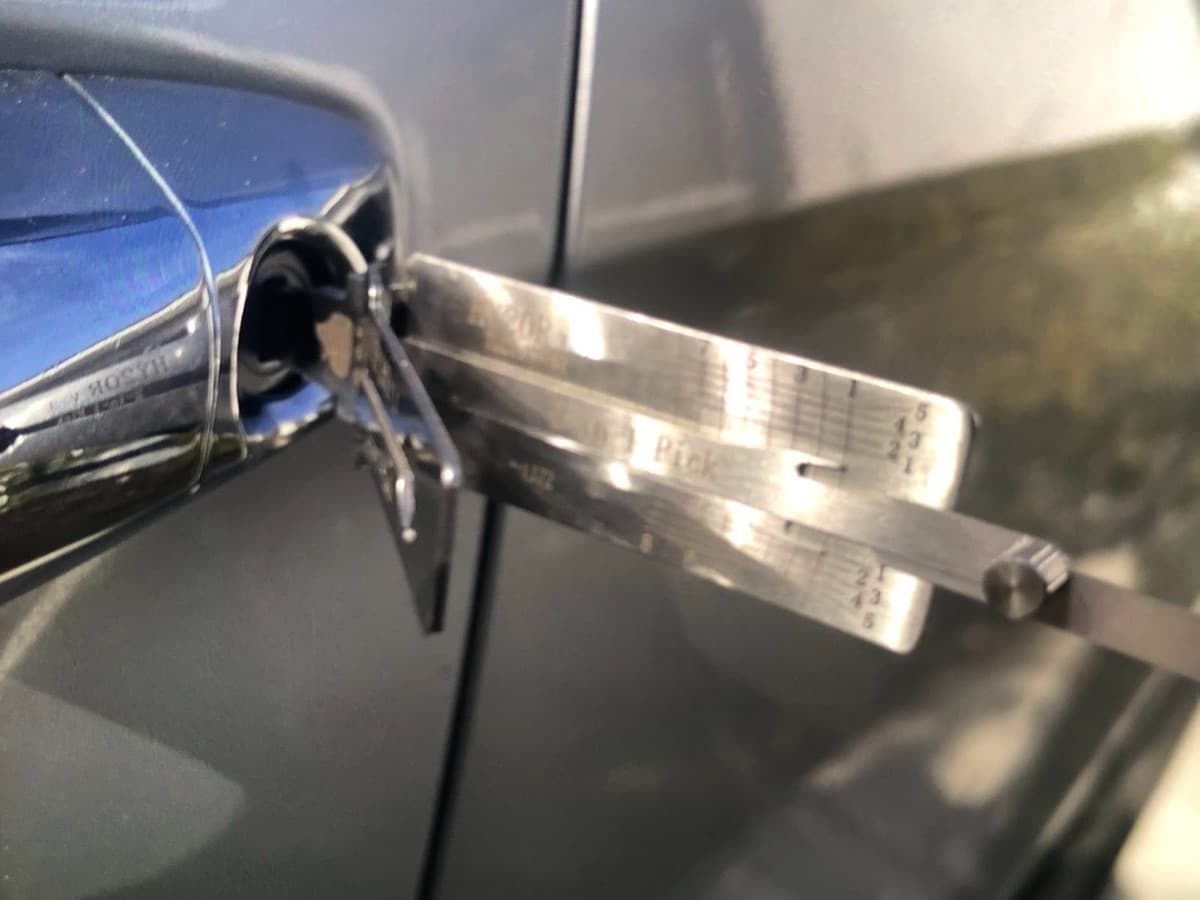
With nobody inside, a lockout is routine. Keys on the seat, in the ignition or in the trunk? Our car lockout service opens doors and trunks without damage to the vehicle. Keys lost, not locked in? See lost car key replacement and our guide to lost car keys with no spare. Dead fob? Try the mechanical key hidden in your fob.
How to keep it from happening
NHTSA’s campaign is “Stop. Look. Lock.” Its tips, plus a few from NoHeatStroke.org and the AVMA:
- Look before you lock. Check the whole car, especially the back seat, before you walk away.
- Leave a reminder, like a purse or briefcase in the back seat, and ask your childcare provider to call if your child doesn’t show up.
- Keep keys and fobs out of children’s reach, and teach kids that a car is not a play area.
- Lock your car whenever you aren’t using it, even if you don’t have kids. A neighborhood child could climb into an unlocked car.
- If a child is missing, check the pool first, then the car, including the trunk, and teach kids to honk the horn if they’re ever stuck in a car, NoHeatStroke.org advises.
- Never leave a pet alone in a parked car, whatever the temperature and however short the stop, the AVMA says.
- Keep a spare key outside the car. We make a spare key fob or smart key at the car, and our guide explains how to get a spare car key made.
FAQ
What should I do if a child is locked in a car?
Call 911 now, even if the car doesn’t feel hot. Tell the dispatcher where the car is and who is inside, then stay with the car and follow the dispatcher’s instructions.
How long can a child be left in a car in Florida?
NHTSA says never to leave a child alone in a vehicle for any length of time. Under section 316.6135 of the Florida Statutes, a child younger than 6 may not be left unattended or unsupervised for more than 15 minutes, or for any length of time if the engine is running, the child’s health is in danger or the child appears to be in distress.
Can I break a car window to save a dog in Florida?
Section 768.139 of the Florida Statutes protects a person who enters a car to rescue a dog, cat or other household pet, or a vulnerable person, from civil liability for damage to the car, but only if they meet all five of its conditions, including making sure law enforcement is notified or 911 is called before going in or immediately after.
How hot does a car get in 10 minutes?
About 20°F hotter than outside, and more than 40°F hotter after an hour, according to the AVMA. Cracking the windows barely helps: in a NoHeatStroke.org study, it changed the temperature by less than 3°F.
Should I call a locksmith or 911 if my baby is locked in the car?
911, every time, and don’t wait on a locksmith. A locksmith is for a lockout with nobody inside, like keys left on the seat.
Keys locked in the car, with no one inside? Call Zoom Locksmith at (305) 528-1358, Monday through Saturday, 8am to 8pm. We’re a family-owned mobile locksmith, insured and background-checked, serving Tampa and all of Tampa Bay since 2018, in English and Spanish. If anyone is inside, call 911 instead.